The hardest part of an enterprise data platform isn’t building it. It’s keeping it right, every day, after everyone has moved on to the next project.

Go-live is day one, not the finish line
Every platform team knows the moment. The launch goes well, then an upstream system adds a column, a nightly pipeline fails, and a manager opens a report full of blanks. Most support models react to that moment. Ours is built so it rarely arrives: we aim to resolve system drift before your users notice it.
Two layers: always watching, always learning
- 24/7 systems support and telemetry. Health checks, log oversight and automated alerts catch a pipeline breakage the moment it happens.
- Proactive root-cause diagnostics. Deep-dive analysis and preventative tuning across pipelines and ontology schemas turn each incident into a lasting fix.
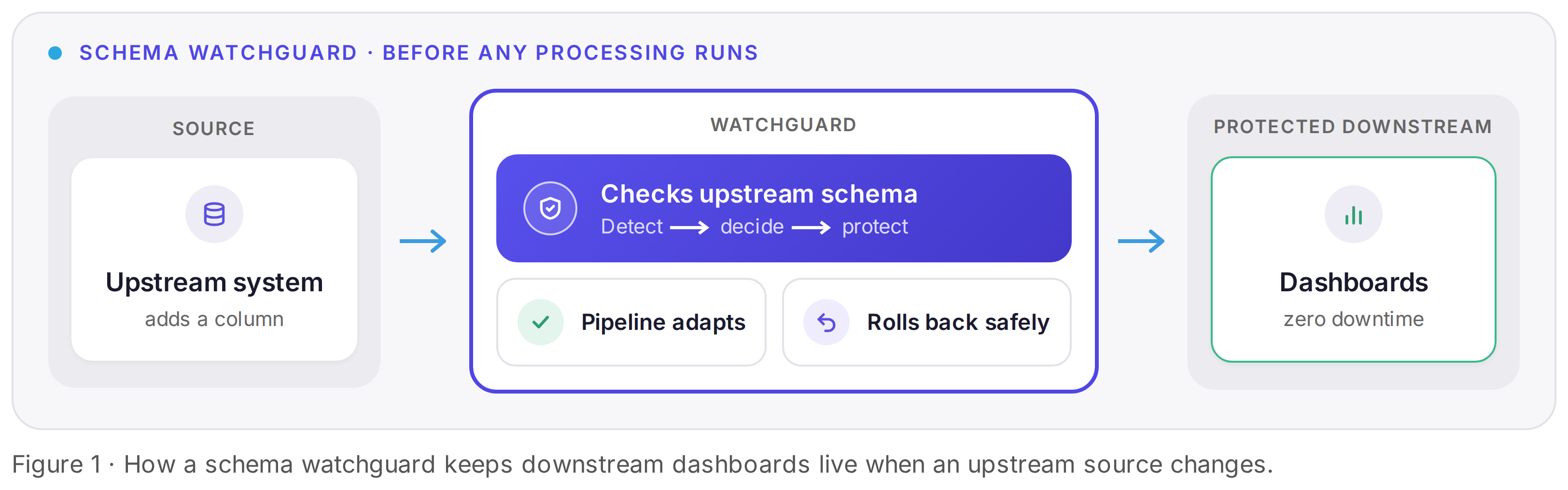
In one build, a “watchguard” checks upstream schemas before any processing runs. When a source changes, the pipeline adapts or rolls back safely, and downstream dashboards saw zero downtime.
Two tiers, sized to where your platform is
A mature platform needs a steady hand; a fast-growing one needs an architect in the room. You pay for the hours you need, not for headcount.
Tier 1: Lean, expert-led
- Capacity: 40–60 hours a month
- Best for: stable, mature platforms
- What’s included: baseline monitoring, scheduled maintenance-window checks, structured SLA bug-fix delivery
Tier 2: Premium, dedicated
- Capacity: 120–160 hours a month
- Best for: platforms that are actively scaling
- What’s included: complex pipeline changes, continuous Palantir AIP optimisation, dedicated system architect guidance
Many teams start lean, step up for a major roll-out, then settle back once it’s stable.
Which tier fits you? Choose Tier 1 if your platform is stable and the main goal is that nothing breaks quietly. Choose Tier 2 if you are shipping new pipelines, onboarding new data sources or rolling out across new teams, and want an architect in the room while you do it.
Around the clock, without the hand-off gaps
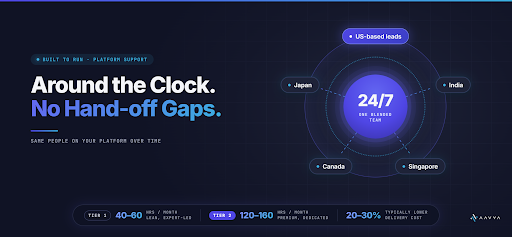
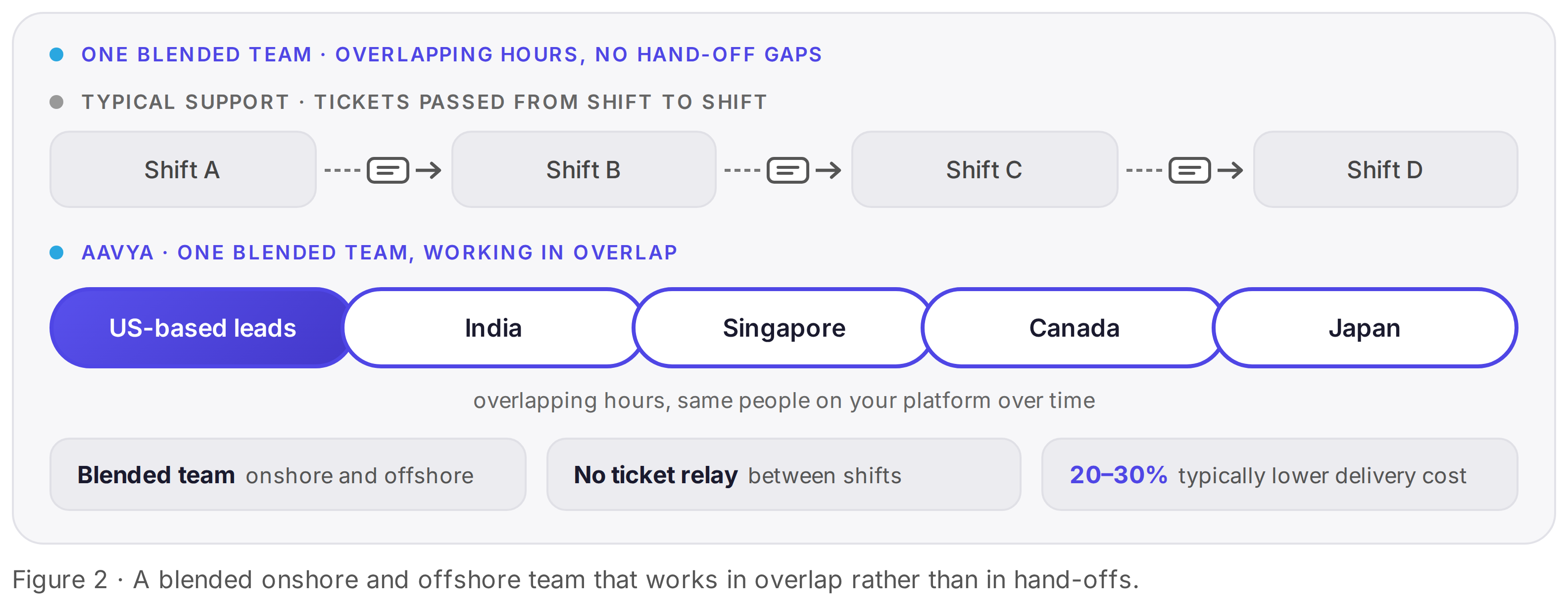
US-based leads work alongside offshore engineers across India, Singapore, Canada and Japan, with overlapping hours and the same people on your platform over time. No relay race of tickets between shifts, and the blend typically lowers delivery cost by 20–30%.
What ownership looks like in practice
The team that builds it, runs it. At a large engineering, procurement and construction firm, a six-person Aavya pod builds the Palantir Foundry applications delivery teams use every day, then stays to run them. Defects and new requirements go straight to the people who know the system, and the opportunity-capture app has had zero significant defects since go-live.
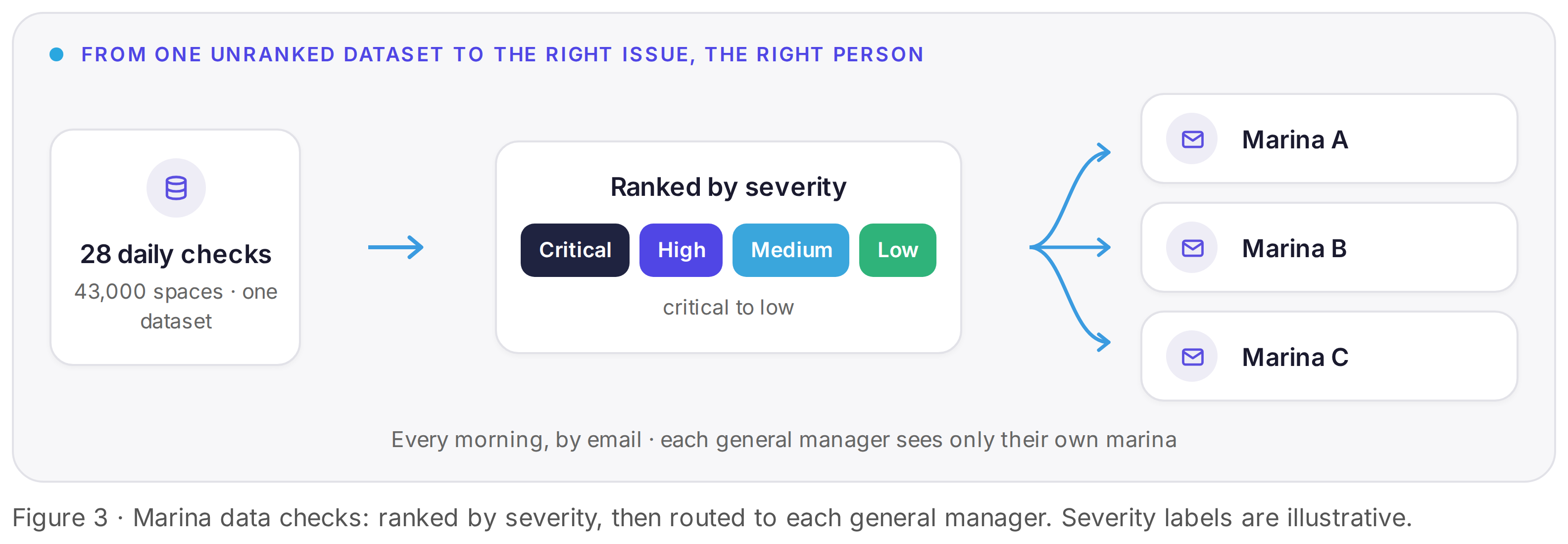
Data checks that reach the right person. A marina operator ran 28 daily checks across 43,000 spaces, with results buried in one unranked dataset. Now issues are ranked from critical to low, and each general manager gets only their own marina’s open issues by email every morning.
Questions we hear before kick-off
Will we lose control of our platform?
No. Your team sets direction and priorities; we run the platform and own delivery against them.
What if our needs change after a few months?
Capacity is hourly and flexes with your roadmap. Many teams start lean, step up for a major roll-out, then settle back.
Who picks up when something breaks overnight?
Round-the-clock monitoring flags it the moment it happens, and the engineers who already know your platform fix it. No cold hand-offs.
The principles behind the model
- We own the delivery; you own the success.
- Platform ownership: your team sets direction; we run the platform.
- Enhanced support: experts tune the platform before issues surface.
- Flexible commercials: hourly capacity that flexes with your roadmap.
- Value-driven strategy: early wins grow into compounding value.
The best support is the kind nobody notices
When support works, nobody notices it. Pipelines run, numbers are right, and people spend their time on decisions instead of broken reports.
Spending more time fixing your platform than using it?
Talk to Aavya about which tier fits. Bring your current platform setup and your roadmap for the next two quarters, and we will walk through what lean or premium support would look like for you.